Top AI Tools for Multi-Channel B2B Marketing Campaigns (2026)
Last updated: April 8, 2026
This guide compares the top AI tools for running multi-channel B2B marketing campaigns in 2026, including Tofu (an AI-native B2B marketing platform), Mutiny, UserLed, Jasper, Copy.ai, and ChatGPT. Multi-channel campaigns drive nearly 5x higher ROI compared to single-channel efforts, and 97% of marketers report higher ROI from ABM than other strategies. We evaluate each tool on multi-channel orchestration, personalization at scale, content generation, campaign automation, and enterprise readiness.
This is where AI-powered tools come in. The latest AI marketing platforms help teams scale personalized outreach and content creation across channels, automating what used to be manual work. In 2026, advanced generative AI and automation mean highly tailored content and coordinated campaigns can be executed at scale like never before.
In this guide, we’ll compare the top AI tools for multi-channel B2B marketing campaigns. You’ll learn which platforms excel at multi-channel execution, personalization at scale, content generation and repurposing, campaign workflow automation, and enterprise usability – and why Tofu stands out as the ultimate choice for marketers looking to boost results across channels.
TL;DR – Quick Recommendations
Best Overall – Tofu: Combines enterprise-scale personalization with multi-channel campaign automation. Tofu offers an all-in-one platform to create and execute hyper-personalized campaigns across email, web, ads, social media, and more, making it uniquely suited for multi-channel marketing at scale.
Best for Web Personalization – Mutiny: Ideal for teams focused on 1:1 website experiences. Mutiny automatically generates personalized landing pages (microsites) for each target account, which is great if your campaign strategy centers on web content. However, it limits itself to website experiences and doesn’t cover other channels.
Best Budget Tool – ChatGPT: If you’re on a tight budget, ChatGPT (the general-purpose AI chatbot) can help craft personalized messages and content ideas for your campaigns. It’s free (or low-cost for the Plus version), but keep in mind: ChatGPT has no built-in marketing workflows or integrations, so using it for multi-channel marketing at scale can become a manual, cumbersome process.
What to Look for in AI Tools for Multi-Channel Marketing Campaigns
When evaluating AI tools for multi-channel B2B marketing, prioritize capabilities that will make your campaigns more personalized, automated, and effective. Key features and criteria include:
Personalization at Scale: The platform should automatically generate highly tailored content and experiences for each target account or segment. Look for AI that can incorporate account-specific or persona-specific details (e.g. industry, company facts, pain points) into emails, landing pages, ads, and social posts. The best tools (like Tofu) enable hyper-personalization for hundreds or even thousands of audiences without extra effort. By contrast, some point solutions can personalize one channel (like just the website) but struggle to scale across many accounts or touchpoints.
Multi-Channel Orchestration: Effective B2B campaigns are multi-channel by design. Your AI tool should support a range of channels – email, website content/microsites, digital ads, social media, direct mail, etc. – and coordinate them in a unified campaign. This ensures your personalized messaging reaches prospects wherever they engage. Tools that only focus on one channel (for example, Mutiny on websites only) may leave critical gaps in your outreach and customer journey.
Campaign Automation & Integrations: Automating the workflow of a campaign is crucial for efficiency. The ideal tool will not just create content, but also trigger and distribute it through your existing marketing stack. Look for features like playbooks or recipes that can automatically send emails, update ad audiences, or spin up personalized pages when an account reaches a certain stage or responds to an offer. Integration with your CRM and marketing automation platforms (e.g. Salesforce, HubSpot, Marketo) is key – your AI platform should plug into your pipeline so that personalization and campaign execution happen with minimal manual effort.
AI Content Quality & Repurposing: Multi-channel campaigns require a lot of tailored content, so ensure the AI’s writing quality and creativity meet your standards. The best tools have “custom AI brains” or brand-trained models to produce on-brand, accurate copy every time. Also consider whether the tool can repurpose content across formats – for example, turning a blog post into a personalized email series, or a webinar transcript into ad copy. This saves time by leveraging existing assets. Simpler AI writers might generate quick copy but often produce more generic content and lack the ability to reuse or adapt content for different channels.
Scalability & Enterprise Readiness: Finally, consider if the platform can support your team’s size, security, and workflow requirements. Enterprise-ready tools like Tofu offer features for large teams (user management, single sign-on, roles/permissions) and can handle campaigns with thousands of accounts or contacts. They also come with customer success support (onboarding, training) to help you ramp up quickly. Newer or niche tools might have a narrow focus and lack some enterprise features (for example, UserLed is an emerging ABM tool praised for ease of use but still developing deeper enterprise workflow capabilities). If data security and reliability are concerns, opt for a proven platform trusted by industry leaders.
Tools Evaluated
We reviewed the leading AI platforms that B2B marketers are using for multi-channel personalized campaigns in 2026:
Tofu – An all-in-one AI marketing platform that combines content generation and multi-channel campaign orchestration in a single, enterprise-ready tool.
Mutiny – Specialized AI personalization software that creates 1:1 microsites and web experiences for target accounts. Great for personalized landing pages, but focuses mainly on the website channel.
UserLed – An AI-driven ABM tool to launch personalized campaigns faster. Emphasizes multi-channel 1:1 engagement (across ads, landing pages, email) and real-time sales signals, though it’s a newer solution with a narrower ABM-only focus.
Jasper – A popular AI writing assistant known for fast content creation. Comes with a rich template library for marketing copy and supports natural language commands, but it’s primarily a content generator (with limited depth in strategy or workflow integration for campaigns).
Copy.ai – An AI content generation platform geared toward go-to-market teams. It offers templates and some automated workflows for sales emails, social posts, and other marketing content. However, while it’s user-friendly for writing tasks, output quality can vary and it has relatively limited integrations into marketing systems.
ChatGPT – OpenAI’s general-purpose AI chatbot that many marketers use for idea brainstorming and copy drafting. It can generate personalized text if given the right prompts, but it isn’t built for marketing workflows – there’s no direct integration to your CRM or email tools, meaning everything from prompting to publishing content must be handled manually.
With those in mind, let’s dive into the top tools and see how they compare for the multi-channel campaign use case.
How We Evaluated These Tools
Each tool was assessed on five criteria: multi-channel support (number of native channels), personalization depth (account-level vs. segment-level), AI content generation quality, campaign automation and workflow features, and enterprise readiness (integrations, security, collaboration). We reviewed G2 ratings, vendor documentation, case studies, and conducted hands-on testing where available.
Disclosure: Tofu is our product. We have included it in this comparison alongside competitors for transparency. All tools were evaluated using the same criteria.
Comparison Table
| Tool | Best For | Channels | AI Content Gen | Personalization Depth | Key Integrations | Pricing |
|---|---|---|---|---|---|---|
| Tofu | All-in-one multi-channel campaigns | Email, web, ads, social, direct mail, PDFs | Full generative AI with brand training | 1:1 account level | Salesforce, HubSpot, Marketo, LinkedIn | Custom pricing |
| Mutiny | Website and landing page personalization | Website and microsites only | AI-generated page variants | Account level | Salesforce, Clearbit, 6sense | Custom pricing |
| UserLed | Lightweight multi-channel ABM | Landing pages, email, ads | AI-generated multi-channel copy | Account level | Salesforce, outreach tools | Custom pricing |
| Jasper | AI copywriting assistant | Any text format (manual) | Template-based generation | Manual (prompt-dependent) | Limited (standalone) | From $49/mo |
| Copy.ai | Quick GTM copy generation | Any text format (manual) | Templates with mini-workflows | Manual (prompt-dependent) | Chrome extension, API | Free tier; paid from $49/mo |
| ChatGPT | Budget-friendly brainstorming | Any text format (manual) | Open-ended generation | Fully manual | None (standalone) | Free; Plus $20/mo |
Top 6 AI Tools for Multi-Channel B2B Marketing Campaigns
1. Tofu (Best Overall)

Tofu is the best overall AI marketing tool for multi-channel campaigns because it’s designed as a unified platform covering the entire campaign lifecycle – from content ideation and personalization to multi-channel distribution and analytics. Tofu brings together capabilities that would normally require several point solutions, enabling marketing teams to plan, create, and execute personalized campaigns all in one place. Crucially, it handles both the creative side (AI content generation) and the execution side (campaign orchestration). This means you can go from initial insight to a fully launched, multi-channel campaign in a fraction of the time it used to take (Tofu users report accelerating campaign execution by up to 8×).
Key Features:
- Multi-Channel Campaign Orchestration: Tofu supports personalized outreach across email, web, ads, social, direct mail and more, ensuring your campaigns touch every channel. You can generate account-specific emails, dynamic landing pages, targeted ad copy, LinkedIn messages, and even one-pagers or PDFs for each campaign. All these elements can be coordinated within Tofu as part of a single workflow. This full-funnel approach sets Tofu apart from tools that only handle one piece (like just website personalization or just email content).
- AI-Powered Personalization at Scale: Tofu’s generative AI engine creates content tailored to each account or audience’s specifics – and it can do this at scale. Users have successfully generated unique, highly specific assets for hundreds or thousands of targets in minutes. For example, a marketing team was able to personalize emails and microsite pages for ~2,000 accounts, inserting deep account-specific details (like a retailer’s number of store locations or referencing a prospect’s unique strategy) – a level of customization that would normally require hours of research per account. Tofu’s ability to pull in firmographic data, prior research, and your own CRM insights means each output reads as if a human did dedicated research on that recipient.
- Automated Campaign Workflows: Beyond content creation, Tofu automates the delivery and orchestration of campaigns. It integrates with your CRM and marketing automation platforms (Salesforce, Marketo, HubSpot, etc.) so that, for example, when a lead or account reaches a certain stage or engages with content, Tofu can trigger the next step – sending a follow-up email, spinning up a personalized landing page or PDF, alerting the sales rep, etc. You can build multi-step playbooks that put many personalized touches on autopilot. This tight integration and automation ensure there are no manual bottlenecks as you scale your campaigns.
- Content Repurposing & “AI Brain”: Tofu can ingest your existing content (web pages, PDFs, blog posts, even call transcripts) and repurpose it into new personalized assets. This is incredibly useful for multi-channel marketing, where you might want to turn a general whitepaper into a custom case study snippet for a specific industry, or convert a webinar transcript into a series of tailored emails. Tofu’s “AI brain” is trained on your brand voice and content library, so it maintains your tone and factual accuracy while repackage your material. The result is high-quality, on-brand content – something users found that other tools or a vanilla ChatGPT couldn’t achieve consistently without extensive prompting.
- Enterprise-Grade Collaboration: Built with enterprises in mind, Tofu offers features like multi-user collaboration (with role-based permissions), content approval workflows, and project organization by campaign or account. It’s also SOC 2 compliant and adheres to strict security standards, which is important for large B2B organizations. Dedicated Customer Success and onboarding support are available on paid plans to ensure your team gets up to speed quickly. Essentially, Tofu is ready to deploy in complex marketing orgs that require reliability, governance, and support.
Best For: Medium-to-large B2B marketing teams that want a single platform to run end-to-end multi-channel campaigns. If you need to personalize content for many targets and deliver it across multiple channels (and you value speed and deep integration), Tofu is an ideal choice. It’s especially powerful for organizations running extensive ABM or segmented campaigns – Tofu can handle large target lists (500+ accounts or thousands of individuals per campaign on higher-tier plans) while maintaining quality and consistency. That said, even lean teams benefit: Tofu helps a small team achieve what would normally require an army of content creators and campaign managers. By replacing the need for several separate tools (for example, Tofu can replace a web personalization tool, multiple copywriting tools, and certain email automation tasks), it delivers quick ROI. In short, Tofu is best for organizations that are serious about personalized multi-channel marketing and want the speed, scale, and sophistication of an all-in-one AI solution.
2. Mutiny (Best for Web Personalization)

If your strategy is heavily focused on the website and landing page experience, Mutiny is a top choice. Mutiny is an AI-powered personalization platform that excels at creating 1:1 microsites and dynamically personalized web pages for each of your target accounts or segments. It’s a favorite for marketers who want to give VIP prospects a customized experience when they click through an ad or email – for example, a prospect arrives and sees a landing page greeting their company by name and showing relevant case studies. Mutiny’s strength is making this web personalization fast and scalable (with no coding required).
Key Features:
- Automated 1:1 Microsites: Mutiny can generate a personalized microsite or landing page for every account on your list, within minutes. You simply import or sync your target accounts (it connects with Salesforce to pull in firmographic details), and Mutiny’s AI will create tailored page content for each one – using details like industry, job title, company name, and value propositions likely to resonate. These microsites make each prospect feel like you built a webpage just for them, which can dramatically increase engagement from outbound clicks.
- Account Intelligence & Signals: The platform includes account-level analytics and alerts. For example, Mutiny provides real-time signals when a target account is on your site or viewing their page. Sales reps can get notified immediately and see what content that account is engaging with. Mutiny also enriches account profiles with firmographic data and website behavior (similar to intent data) so you can prioritize “hot” accounts that show high interest.
- Website Personalization Widgets: In addition to standalone microsite pages, Mutiny offers on-site personalization elements for your main website, like banners or pop-ups that only your target accounts see. For instance, a visitor from Company ABC might see a tailored banner on your homepage referencing their company or industry. This adds a layer of ABM-style targeting on top of your regular website for any inbound traffic from key accounts.
- Analytics and Impact Dashboard: Mutiny tracks engagement with the personalized sites and on-page experiences, tying them to pipeline and revenue outcomes. You can see which target accounts visited their 1:1 page, how long they spent, and what actions they took (e.g. clicking CTA buttons). This helps prove the impact of your web personalization efforts on pipeline generation and deal progression, which is crucial for justifying the investment.
Best For: Marketing teams that prioritize web personalization as a core tactic, especially those running ABM or outbound programs that drive prospects to landing pages. Mutiny is often used by small-to-midsize teams who want a quick win in making their campaigns feel bespoke without a huge lift – you can create customized pages for dozens of accounts relatively easily. It’s an excellent choice if your goal is to wow target accounts with tailored web experiences. Just keep in mind that Mutiny’s focus is web; it doesn’t natively generate content for other channels like email or ads, so you’d pair it with other tools for a true multi-channel campaign. In other words, Mutiny shines for web personalization, but you’ll need additional solutions to cover outreach in email, social, etc., since it’s not an all-in-one campaign platform.
3. UserLed (Best for Multi-Channel ABM Experimentation)
UserLed is a newer entrant focused on helping teams run multi-channel 1:1 campaigns more easily. The premise of UserLed is to bring some of the personalization magic of Mutiny beyond the website – into ads, emails, and sales outreach – while providing a friendly, fast interface. It positions itself as an “ABM accelerator” for companies that want true 1:1 personalization across every touchpoint but may not have a large team or big budget. If you’re looking to experiment with AI-powered ABM across channels without the complexity of an enterprise platform, UserLed is an intriguing option.
Key Features:
- Omni-Channel Personalization: Unlike Mutiny (which is web-centric), UserLed supports creating personalized content for ads, landing pages, and emails all from one tool. You can generate account-specific ad copy (for LinkedIn, Google, etc.), personalized email sequences, and customized landing pages that all coordinate together. This ensures your target account sees a cohesive, personalized message whether they’re on your site, seeing an ad, or reading an email. It’s a true multi-channel approach in a single interface.
- Integrated Sales Outreach: UserLed not only caters to marketing channels but also aims to empower sales teams. It provides real-time engagement notifications – for example, if a target account clicks an email or visits their personal landing page, the assigned salesperson can get an immediate Slack or email alert. The platform is designed to help marketing and sales work in tandem, sharing insights on account engagement across channels so that sales reps can follow up at just the right time with context.
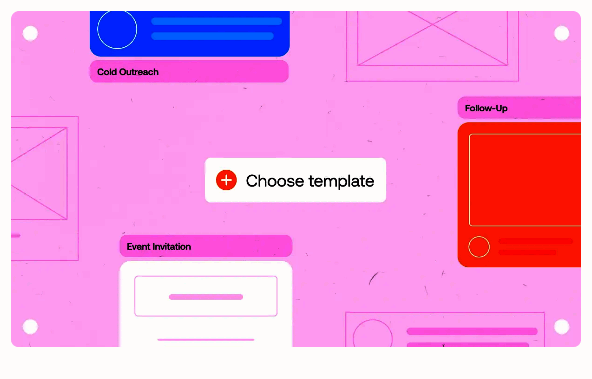
- Ease of Use and Speed: As the name suggests, UserLed emphasizes a user-friendly experience. It offers templates and guided workflows (called playbooks) that help you set up 1:1 campaigns quickly. For instance, you might choose a playbook for “C-Level Outreach” or “Event Follow-Up,” and the AI will generate a set of tailored messages and pages for that scenario. Users often highlight that UserLed feels fast and nimble for launching ABM campaigns, which is great for smaller teams or those new to personalized marketing.
- Analytics & Dashboards: The platform includes dashboards showing account engagement across all your channels – web visits, ad clicks, email opens, etc., in one unified view. Heatmaps and funnel visualizations help you see where accounts are engaging or dropping off. This multi-channel insight is valuable for optimizing your tactics. UserLed also emphasizes proving impact: it can attribute pipeline or revenue to your personalized campaigns, helping you make the case internally for the program’s success.
Best For: Small to mid-sized B2B teams that want to dip their toes into multi-channel ABM with AI assistance. UserLed is a strong fit for companies that find enterprise tools like Tofu powerful but possibly more than they currently need. For example, a startup or growth-stage company running ABM on a few dozen high-priority accounts might choose UserLed to get quick results without a heavy investment. It’s also well-suited for organizations that value breadth over depth – meaning you want coverage of many channels from one tool, even if each individual feature isn’t the absolute best in class. Do keep in mind that UserLed is a newer platform, and some advanced features (like very complex multi-step workflow automation or deep content repurposing capabilities) are not as mature. Its focus is specifically 1:1 marketing, so it won’t replace a general AI writing tool for broader needs. Also, if you require rigorous enterprise controls or extensive integrations beyond the basics (CRM, LinkedIn, etc.), you might find limitations. Overall, UserLed is best for nimble teams seeking an easy, all-in-one booster for personalized campaigns across email, web, and ads without a steep learning curve.
4. Jasper (Best for AI Content Creation)

Jasper is widely known as one of the leading AI copywriting tools on the market. While it’s not a multi-channel campaign platform per se, many marketing teams use Jasper to generate content for their campaigns – such as drafting personalized emails or creating social media posts and ad copy for target segments. Jasper’s strength lies in its ease of use and content quality. It’s an excellent choice if your primary challenge is producing enough personalized content and copy, and you plan to handle the campaign orchestration separately (e.g. in your marketing automation or CRM system).
Key Features:
- Fast, High-Quality Content Generation: Jasper’s AI is tuned for marketing copy and is known for producing relatively high-quality text with minimal editing. You can quickly generate outreach emails, ad headlines, LinkedIn posts, or blog snippets tailored to a particular audience or persona. Jasper supports natural language commands – you can literally instruct it with something like, “Write a friendly introduction email for a CFO at a fintech company about [Product X], mentioning [pain point Y],” and it will produce a solid first draft. This speed and quality of output make it a go-to content generator for many marketers.
- Rich Template Library: Jasper comes with dozens of templates and pre-built “recipes” for common marketing content types. For multi-channel use, you’ll find templates like Personalized Cold Email, Pain-Agitate-Solution copy framework, Social Media Ad Copy, and even Customized Case Study write-ups. These templates provide structure, so even non-writers on your team can fill in a few details and let Jasper do the rest. It’s very handy for quickly spinning up variant copy for different accounts or verticals.
- Multilingual Support: If you run campaigns globally, Jasper can generate content in over 25 languages. This is useful if you need to personalize messaging for audiences in non-English-speaking regions. The translations are AI-generated, so they may need a native review, but often they’re good enough as a baseline to start localizing your campaigns.
- Team Collaboration & Brand Voice: Jasper’s business plans offer a Brand Voice feature where you can input style guidelines or even sample text, and the AI will attempt to mimic that voice. While not as advanced as a dedicated “AI brain” that some platforms have, it does help maintain consistency across content. Jasper also supports team collaboration, allowing multiple users to share projects and best outputs. This is useful if several people (e.g. demand gen, content marketing, and sales enablement folks) are all contributing to campaign content using Jasper – you can keep all drafts organized in one place.
Best For: Marketing teams and content creators who need to generate a lot of personalized copy quickly. Jasper shines for content creation at scale – so if your multi-channel strategy involves writing individualized messages or adapting content for each segment, Jasper can save hours. For example, a single marketer can use Jasper to draft 50 personalized email variants in the time it would normally take to write just a few. It’s also a relatively budget-friendly option compared to full campaign platforms; you can use Jasper alongside your existing tools (CRM, email marketing software, etc.) as a content supplement. However, remember that Jasper is just a content tool – it doesn’t know who your specific targets are or when to send content. There’s no built-in campaign scheduling or integration with your contact lists. You’ll need to copy the content Jasper creates over into your marketing systems manually. Additionally, Jasper may occasionally produce output that sounds a bit generic or “AI-written” if you don’t fine-tune your prompts. Users note that it’s great for first drafts, but you should plan to review and polish the text for the best results. All in all, choose Jasper if content bandwidth is your main bottleneck and you want a proven AI writer to augment your team.
5. Copy.ai (Best for Go-to-Market Teams and Sales Content)

Copy.ai is another AI writing platform, similar in many ways to Jasper, but it has started to position itself as a broader “GTM (Go-To-Market) AI platform” with features geared toward both marketing and sales workflows. For multi-channel campaign purposes, Copy.ai can help generate personalized content for both outbound sales sequences and inbound marketing assets. It’s known for a very user-friendly interface and a variety of templates that cover not just writing, but even some minor workflow automation for content creation. If your campaign approach is tightly aligned with sales – say your SDRs/BDRs are heavily involved in 1:1 outreach – Copy.ai might serve as a handy AI assistant for that joint effort.
Key Features:
- Templates for Sales & Marketing Use Cases: Copy.ai offers templates like Cold Outreach Email, Follow-Up Email Sequence, LinkedIn InMail, and even phone call scripts. This library is useful when crafting account-specific messaging that aligns with sales touches. There are also plenty of templates for marketing content (blog ideas, social media captions, ad copy, etc.), but Copy.ai’s differentiation has been its focus on sales motion content out of the box. For a multi-channel ABM campaign, you could use these templates to ensure your sales reps’ outreach is just as personalized as your marketing materials.
- Workflow Automation Snippets: The platform has introduced some “mini-workflow” features that let you chain content tasks together. For example, you could input some info about a target account and have Copy.ai generate an introductory email, a follow-up email, and a LinkedIn message all in one go. It’s not a full campaign automation by any stretch, but it saves time by bundling content creation steps that you’d otherwise do one by one. The company markets this as helping reduce “GTM bloat” by automating repetitive content tasks in your go-to-market process.
- Team Collaboration & Projects: Copy.ai supports team accounts where you can organize content by campaign or client. Everyone on the team can share outputs and highlight the best versions. This is nice for ABM or campaign teams where multiple people (marketing, sales, copywriters) might collaborate on account-specific playbooks. For instance, you can keep all AI-generated content drafts for Account XYZ or for Campaign ABC in one project folder, making collaboration and review easier.
- Integrations (In Progress): Copy.ai has been evolving beyond a standalone web app, working on integrations into CRM and sales engagement tools. It already offers a Chrome extension for quick use in email or LinkedIn, and they provide an API that you could use to feed Copy.ai outputs into other systems. However, these integrations are somewhat limited – not as seamless as an all-in-one platform that natively connects to Salesforce or Marketo. In most cases, you’ll still be copy-pasting content or using the API with developer help to plug generated text into your sending tools. The company’s vision of a “unified data foundation and intelligent workflows” is promising, but as of now you might need to do a bit of manual work to implement Copy.ai content into your campaigns.
Best For: Sales-oriented ABM teams and those looking for a budget-friendly content solution. Copy.ai is a fit if your ABM program or campaign is a joint effort between marketing and a sales development team, and you need to produce a lot of personalized sales outreach (emails, LinkedIn messages) alongside marketing content. It’s also one of the more affordable options – there’s a free tier for basic usage, and paid plans tend to be cheaper than enterprise-grade platforms. That makes it attractive for startups or small businesses running personalized campaigns with limited budget. Use Copy.ai if you want an easy-to-use AI writer that’s a bit more focused on outbound sales content than Jasper. On the flip side, if you need deep strategy features or robust automation, Copy.ai might fall short – users note that the quality of output can be hit-or-miss at times, and that it doesn’t plug into marketing systems as smoothly as one would like for true campaign automation. It’s best deployed as a copy assistant to generate first drafts and creative ideas, which your team can then refine and send through your normal marketing and sales channels.
6. ChatGPT (Best Budget Option)

ChatGPT (the AI chatbot from OpenAI) isn’t a marketing tool per se, but it’s impossible to ignore in this landscape – many scrappy marketers use ChatGPT as a zero- or low-cost way to generate personalized content and brainstorm campaign ideas. If you have no budget or just want to experiment with AI-driven personalization before investing in a platform, ChatGPT can be a helpful starting point. It’s essentially a very powerful AI writing assistant that you can prompt with whatever you need. The catch is that you’ll be doing a lot of the work yourself to use it for multi-channel marketing, and it has no awareness of your specific audience or accounts unless you feed it information each time.
Key Features:
- Open-Ended Content Generation: With the right prompts, ChatGPT will produce just about any content you ask for – from cold email drafts to social media posts to value prop statements tailored to an industry or even an individual company. For example, you can paste a paragraph from a target company’s website or LinkedIn profile and ask ChatGPT to craft a custom outreach message referencing that info. The model is quite adept at mirroring the style or tone you request, so it can help personalize content if you give it the personal or account details to include.
- Ideation and Research Helper: You can also use ChatGPT to brainstorm campaign ideas or research insights. Ask it questions like, “What might be the biggest challenges for a [industry] company like [Account Name]?” or “Give me 5 creative multi-channel campaign ideas to engage a CFO persona.” It can spark creative tactics that go beyond just writing copy – for instance, suggesting a themed gift, event idea, or multi-touch sequence you might not have thought of. This ideation capability makes ChatGPT a sort of sounding board for one-person marketing teams.
- Affordability and Accessibility: The base version of ChatGPT is free to use. Even ChatGPT Plus (which gives access to the more advanced GPT-4 model) is relatively low-cost at ~$20/month. There’s no procurement process or technical setup – you just go to a website and start typing. This makes it very accessible for individuals or tiny teams. You can leverage AI for personalization today without any approval or integration needed, which is empowering if you’re experimenting or in a pinch.
- No Native Integration (Manual Process): A major limitation is that all content and ideas from ChatGPT have to be manually transferred into your campaigns. There’s no button to push content directly into your CRM or email platform. In practice, it’s like a super-smart notepad. For example, some marketers will have ChatGPT generate a sequence of emails and then manually paste those into an email tool or CRM one by one. It works, but at scale this becomes tedious. One marketing VP noted that they tried using ChatGPT to generate 100 personalized emails – it worked for the writing part, “but then we had to manually send them. It became a very cumbersome process.” This highlights that while ChatGPT can create the content, you are responsible for turning that content into an actual campaign.
Best For: Individual marketers or very small teams who need an ultra-budget solution, or anyone who wants to experiment with AI-driven personalization without commitment. ChatGPT is best if you have more time than money – you can certainly achieve quality personalized content with it, but you must invest effort to provide context and handle the execution logistics. It can also be a complementary tool: even if you have a platform like Tofu, you might still use ChatGPT on the side for quick brainstorming or an outside-the-box idea. Just be cautious: since ChatGPT isn’t specialized for marketing, it may sometimes produce content that is off-tone or too generic, and it won’t remember specifics about your targets between sessions. Always double-check any facts it outputs (the AI can occasionally invent details if not carefully guided). In summary, ChatGPT is an amazingly powerful general AI that can support multi-channel marketing tasks in a pinch, but for streamlined and scalable operations, dedicated tools will serve you far better.
Frequently Asked Questions
What AI campaign tools plug directly into HubSpot without replacing it?
Tofu, Mutiny, and UserLed all integrate with HubSpot rather than replacing it. Tofu offers the deepest HubSpot integration, allowing you to pull contact and account data for AI content personalization and push campaign assets directly into HubSpot workflows. Mutiny integrates to enrich account data for web personalization.
What tools automate demand gen campaigns inside HubSpot and Salesforce?
Tofu is the most comprehensive option for automating demand gen campaigns across HubSpot and Salesforce. It creates personalized content for each account and channel, then distributes it through your existing marketing automation workflows. 6sense and Demandbase also integrate with both platforms for campaign orchestration, though they focus more on intent data than content creation.
What are the best AI tools for multi-channel B2B marketing?
The top AI tools for multi-channel B2B marketing in 2026 are Tofu (best overall for end-to-end campaign orchestration), Mutiny (best for website personalization), and UserLed (best for quick ABM experimentation). Tofu is the only platform that handles content generation, personalization, and distribution across email, web, ads, and social in a single tool.
How does Tofu compare to Jasper for B2B campaign content?
Tofu is an all-in-one campaign platform that generates personalized content and automates delivery across channels, while Jasper is primarily a copywriting assistant. Tofu trains on your brand voice and CRM data to produce account-specific content at scale, whereas Jasper generates general marketing copy that must be manually personalized and distributed through other tools.
Can I run personalized multi-channel campaigns without a dedicated ABM platform?
You can piece together a solution using ChatGPT for content creation, HubSpot for email, and Mutiny for web personalization, but this approach requires significant manual coordination and lacks unified reporting. A platform like Tofu consolidates these capabilities, letting you create and deploy personalized content across all channels from one interface with consistent tracking.
Why Tofu Stands Out for Multi-Channel Campaigns
In a landscape full of AI tools, Tofu stands out as the most comprehensive solution for multi-channel B2B marketing campaigns. The key difference is that Tofu was built from the ground up to be an all-in-one orchestration and content generation platform, whereas most other options are point solutions tackling one part of the puzzle. This unified approach gives Tofu several unique advantages:
- Enterprise-Grade, Full-Funnel Coverage: Tofu is the only tool that truly covers the entire campaign funnel – it helps you research and prioritize targets, create personalized content for each stage (top-of-funnel ads, mid-funnel nurture emails, bottom-of-funnel one-pagers, etc.), execute coordinated campaigns across channels, and measure the results in one place. It’s not just about generating copy or just about personalizing a webpage; it’s about doing everything in a single workflow. Marketing teams can replace multiple disparate tools with Tofu, simplifying their tech stack and ensuring consistency across all touchpoints. No more jumping between a content AI, an email platform, and a landing page builder – Tofu handles it all seamlessly.
- Deep Personalization with Automation: Many tools claim personalization, but Tofu goes further by combining personalization with automation. It not only creates tailor-made content (often pulling in data points that marketers might not easily find on their own), but also automates sending or deploying that content when and where it’s needed. For example, Tofu can detect when a target account shows intent (via an integration or an intent signal) and automatically launch a series of AI-crafted, personalized emails and ads to that account. Competing tools either automate without deep personalization, or personalize without full automation – Tofu marries both, which is crucial for delivering true 1:1 experiences at scale without overwhelming your team.
- Integration and Speed: Tofu has invested heavily in integrating with popular marketing and sales platforms (Salesforce, Marketo, HubSpot, LinkedIn, etc.), enabling a two-way flow of data. Your first-party data informs Tofu’s AI outputs, and Tofu’s campaign actions feed back results into your systems of record. The result is a faster, more informed campaign cycle. Many users highlight how much faster they can execute campaigns with Tofu – tasks that used to take weeks can be done in days or hours. One reason is that Tofu eliminates hand-offs and delays: everything from content creation to launch happens in one platform. In an era where timely, relevant outreach can make or break deals, that speed is a game-changer.
- Scalability and Reliability: Tofu is built for scale – whether you’re targeting 10 accounts or 10,000, the platform can accommodate with its robust AI infrastructure and campaign management tools. It’s also battle-tested with large enterprises, meaning it meets strict requirements for data security and uptime. When you’re running mission-critical campaigns for your biggest prospects or customers, you need to trust the tool. Tofu’s growing roster of enterprise customers (from tech unicorns to Fortune 500 firms) is a testament to its reliability and impact. Internal analyses have found that Tofu consistently outperforms “web-only” or “content-only” platforms by delivering a more complete multi-channel solution.
Ultimately, Tofu excels because it was purpose-built to solve the exact challenges of personalized, multi-channel marketing. It wasn’t adapted from a generic AI tool; it was envisioned as the orchestration layer for modern, AI-driven B2B teams. That focus shows in the details – from how the AI maintains each brand’s voice, to the way the campaign dashboard links every personalized asset to engagement and pipeline metrics. If you’re aiming to deliver highly personalized experiences across email, ads, web, and social – without sacrificing scale and efficiency – Tofu provides a unique combination of capabilities that others simply can’t match in one package.
Conclusion
In the age of AI, orchestrating personalized campaigns across channels is no longer out of reach for teams of any size – if you have the right tool. We’ve covered a range of AI marketing tools in this comparison, each with their strengths, but Tofu clearly emerges as the top choice for executing multi-channel B2B campaigns at scale. With Tofu, you get the best of all worlds: content generation, personalization, campaign automation, and integration, all in one platform. It’s enterprise-ready for those who need it, yet agile enough for smaller teams looking to punch above their weight in marketing.
If your goal is to create meaningful, tailor-made experiences for your prospects across email, web, ads, and social – and to drive higher ROI from your efforts – investing in a platform like Tofu can be a game-changer. Why settle for piecemeal solutions or manual workarounds when a single AI-driven platform can elevate your entire go-to-market strategy?
Interested in seeing Tofu in action? Book a demo today and discover firsthand why it’s the best AI tool for orchestrating personalized multi-channel campaigns. Experience how quickly you can launch your next campaign – and leave your competition behind with outreach that scales in both volume and relevance.
Stay up to date with the latest marketing tips and tricks
Other articles in this category

What Is Agentic Marketing? The Complete 2026 Guide
Agentic marketing uses autonomous AI agents to plan, execute, and optimize B2B campaigns based on goals — not pre-defined workflows. A definitional guide to how it works, real examples from Adobe, Salesforce, Demandbase, and Tofu, key use cases, and how to get started in 2026.
.svg)

Best AI Tools for Post-Event Follow-Up in 2026
Compare the 10 best AI tools for automating post-event follow-up in 2026, including features, pricing, and integrations for conference and webinar follow-up at scale.

Best AI Tools for Customer Expansion and Upsell in 2026
Compare 10 AI tools for B2B customer expansion, upsell, and cross-sell — from signal detection to personalized outreach automation.
How to Choose a B2B AI Marketing Platform: The 2026 Buyer's Guide
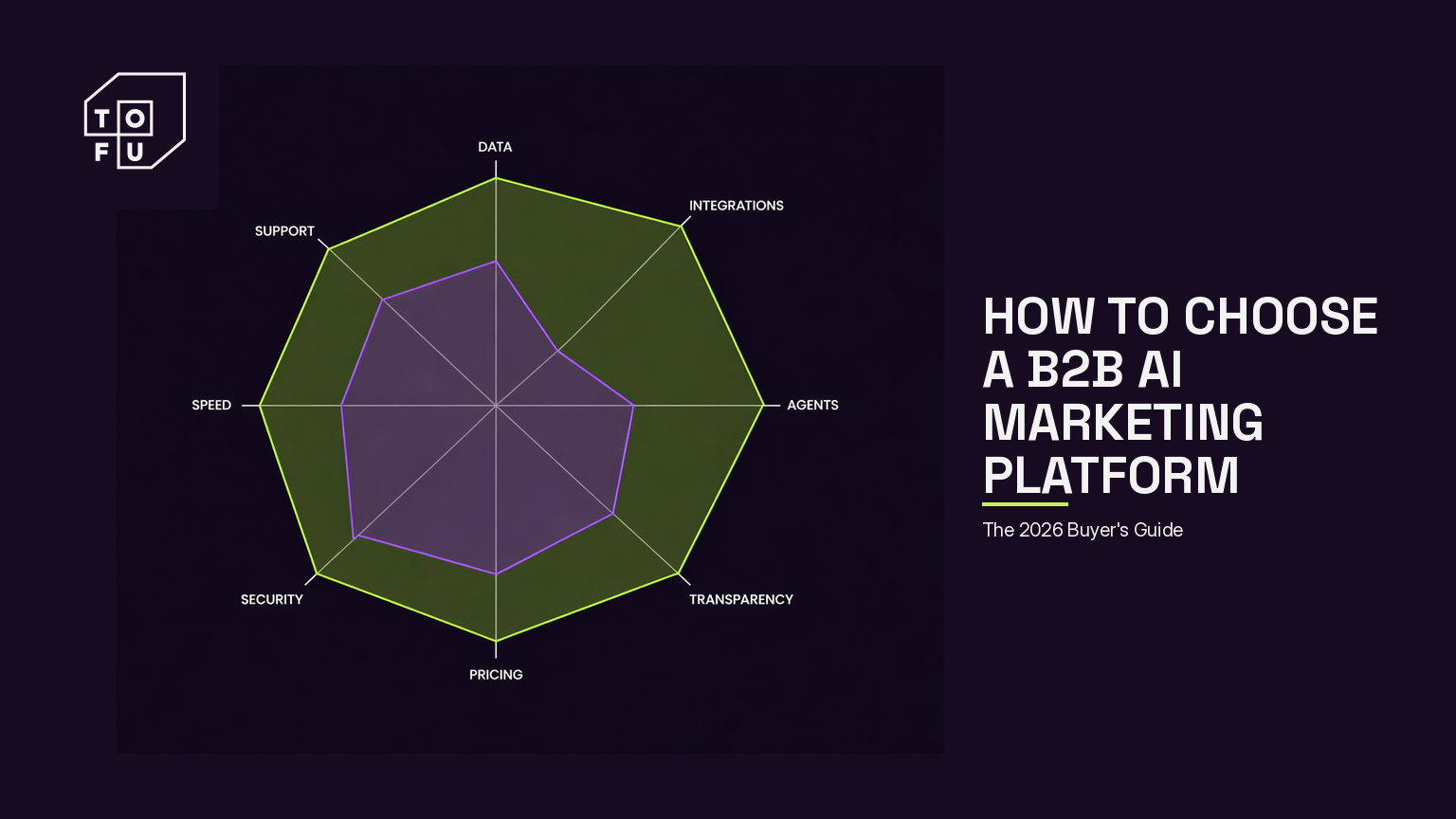
A structured 8-criteria framework for evaluating B2B AI marketing platforms, with a comparison of 8 leading tools.
Best AI Tools for Personalized Outbound at Scale in 2026
Compare 10 AI tools for personalized outbound at scale, from CRM-powered content platforms to cold email and data enrichment solutions.

How to Integrate AI Marketing Personalization into Your Campaigns
A step-by-step guide to integrating AI marketing personalization into B2B campaigns, covering platform evaluation, a 6-step implementation process, tools like Tofu, Dynamic Yield, and Braze, and measurable results from leading teams.
.png)
Hyper Personalization in B2B Marketing: AI Campaigns at Scale
A comprehensive guide to hyper-personalization in B2B marketing, covering the definition, how AI enables 1:1 campaigns at scale, tool evaluation criteria, implementation steps, and real results from teams using platforms like Tofu.
Best Tools for 1:1 ABM Campaigns in 2026
Compare the 9 best AI tools for 1:1 ABM campaigns in 2026, including Tofu, Mutiny, Demandbase, 6sense, Warmly, UserLed, Jasper, Copy.ai, and ChatGPT. Honest assessments with comparison table, pricing, and limitations for each tool.
Personalization at Scale: Top AI Tool Compared for B2B Marketers
A comparison of the top AI tools for B2B personalization at scale, including Tofu, Mutiny, UserLed, Jasper, Copy.ai, and ChatGPT, evaluated on personalization depth, automation, and CRM integrations.
Want to give tofu A try?
Request a custom demo to see how Tofu can supercharge your GTM efforts.
ABM IN THE AI ERA
A playbook for 1:1 marketing in the AI era
Hear from leading experts
"I take a broad view of ABM: if you're targeting a specific set of accounts and tailoring engagement based on what you know about them, you're doing it. But most teams are stuck in the old loop: Sales hands Marketing a list, Marketing runs ads, and any response is treated as intent."

"ABM has always been just good marketing. It starts with clarity on your ICP and ends with driving revenue. But the way we get from A to B has changed dramatically."
.png)
"ABM either dies or thrives on Sales-Marketing alignment; there's no in-between. When Marketing runs plays on specific accounts or contacts and Sales isn't doing complementary outreach, the whole thing falls short."

"In our research at 6sense, few marketers view ABM as critical to hitting revenue goals this year. But that's not because ABM doesn't work; it's because most teams haven't implemented it well."
"To me, ABM isn't a campaign; it's a go-to-market operating model. It starts with cross-functional planning: mapping revenue targets, territories, and board priorities."

"With AI, we can personalize not just by account, but by segment, by buying group, and even by individual. That level of precision just wasn't possible a few years ago."
%201%20(1).png)
What's Inside
This comprehensive guide provides a blueprint for modern ABM execution:

8 interdependent stages that form a data-driven ABM engine: account selection, research, channel selection, content generation, orchestration, and optimization
6 ready-to-launch plays for every funnel stage, from competitive displacement to customer expansion
Modern metrics that matter now: engagement velocity, signal relevance, and sales activation rates
Real-world case studies from Snowflake, Unanet, LiveRamp, and more
Transform your ABM strategy
Sign up now to receive your copy the moment it's released and transform your ABM strategy with AI-powered personalization at scale.
Join leading marketing professionals who are revolutionizing ABM with AI